

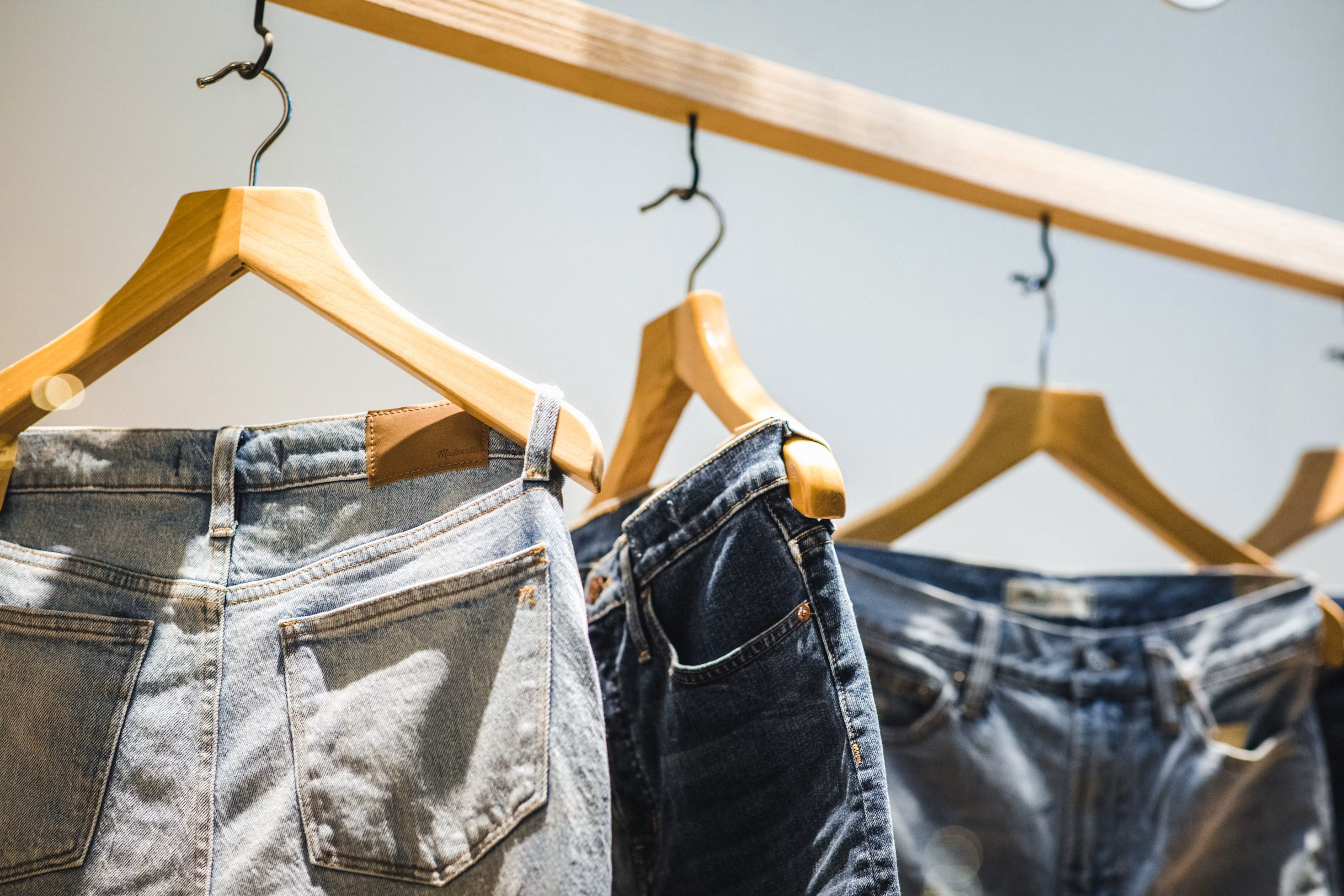
A pair of jeans keeps a record of the person who wore them. The fades behind the knees, the pale ring of a wallet in the back pocket, the whiskers at the hips — none of it is accidental, and none of it can be convincingly faked.
Turn them inside out first. A clean coloured line running along the outseam means selvedge denim, woven on a narrow shuttle loom. It isn't automatically better, but it usually means somebody cared about the cloth. Look at the hem: a chain-stitched hem twists into a slight rope as it's washed, and that twist is something people pay extra for.
Then the hardware. Copper rivets at the pocket corners, a button fly, a back patch made of leather rather than card. Each one tells you roughly when and where a pair was made, and how it was meant to be treated.
“Good fades are earned one day at a time. Bad ones arrive from a factory.”
What we look for most is the crotch and the inner thighs, where denim wears through first. A pair with a strong seat and honest fades will easily do another decade. A pair that's been sandblasted to look old has already used up most of its life.
