

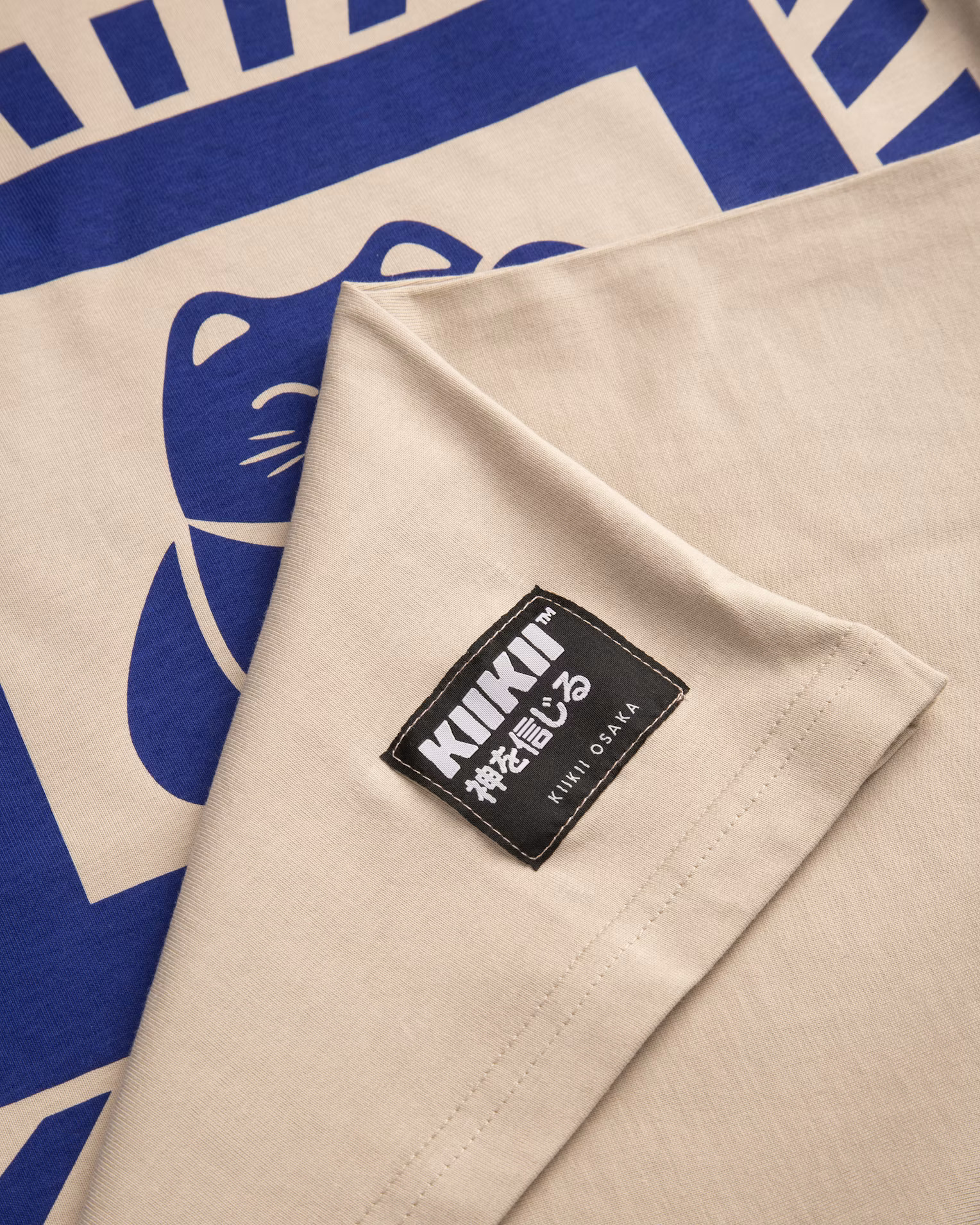
Before we look at the seams or the cloth, we turn a garment inside out and find the label. It's the closest thing secondhand clothing has to a CV, and most of it is written in a code anyone can learn.
Start with how it's attached. A woven label stitched on all four sides was made to last as long as the garment. A printed satin tab caught in one seam was made to be cheap. Neither proves anything on its own, but they point in a direction.
Then the fibre content. “100% wool” or “pure new wool” means what it says. A long list of blends with small percentages often means the maker was chasing a price. Country of origin tells you something about era as much as quality: a lot of good British and Italian knitwear stopped being made at home in the nineties.
“The label is the only part of a garment that was written down on purpose.”
Care symbols changed over the decades too, which helps with dating. And when a label has been cut out entirely, we say so in the listing — it usually means the piece was sold off as a second, and we check it more carefully as a result.
